
- 15 سبتمبر، 2025
- Posted by: ReWeb
- Category: آخر
What if the most expensive mistake in a DeFi transaction is not a high gas fee, but a transaction that should never have been signed? That question changes how users should think about wallet software. Gas optimization, transaction simulation, and cross-chain swaps are often presented as separate features, yet they address different stages of the same decision: can this action be executed safely, at a reasonable cost, and with an outcome that matches the user’s intention?
For users in the United States moving assets across Ethereum and other EVM-compatible networks, the distinction matters. A transaction may appear inexpensive while carrying substantial execution risk. A cross-chain quote may look attractive while omitting destination-chain fees, slippage, or bridge-specific assumptions. A simulation may predict success but cannot guarantee that market conditions, liquidity, or contract state will remain unchanged until confirmation. The useful mental model is therefore not “the wallet finds the cheapest transaction.” It is “the wallet helps the user evaluate an uncertain execution path.”
The first myth: low gas means low cost
Gas is the computational resource consumed by a transaction on a blockchain. On Ethereum and other EVM chains, the final fee generally depends on the amount of computation and storage a transaction uses, multiplied by the price paid for that execution. Reducing unnecessary computation can lower the fee, but the cheapest transaction in isolation is not always the cheapest route to a desired result.
Consider a token swap. A direct route may require fewer calls than a multi-step route, yet deliver a worse exchange rate because available liquidity is thinner. Conversely, a route using several pools may consume more gas but produce a better net result after accounting for price impact. The relevant calculation is not simply gas in dollars. It is the value received minus gas, trading fees, bridge charges, slippage, and the possibility of failure.
This is why gas optimization has a boundary. A wallet can help identify fee settings, estimate execution requirements, and make transaction details easier to inspect. It cannot repeal network congestion, create liquidity, or guarantee that a smart contract will behave as expected. Aggressively reducing a fee can also increase the chance that a transaction remains pending or fails to execute within the user’s intended window. Saving a small amount of gas is not an improvement if the user loses a favorable market price while waiting.
What transaction simulation can reveal
Transaction simulation is a pre-execution test. Instead of immediately broadcasting a signed transaction, software evaluates how the call would behave against an available representation of blockchain state. Depending on the implementation, the result can expose whether the transaction is likely to revert, which assets may move, what approvals are being used, and whether the resulting balances differ from the user’s expectation.
This addresses a common misconception: simulation is not the same as prediction. It is closer to a controlled rehearsal. If a swap would fail because an allowance is insufficient, the simulation may reveal that before the user pays a network fee. If a contract interaction would transfer an unexpected token or invoke a suspicious method, a readable review can provide an important warning. These checks are especially valuable because many blockchain transactions are irreversible once mined.
However, a simulation is conditional on its inputs. The state of a decentralized exchange can change between simulation and inclusion. A price can move, a pool can be drained or replenished, a block can become crowded, or a transaction placed earlier in the same block can alter available liquidity. Some contract behavior may also depend on external systems or conditions that are difficult to model perfectly. Simulation reduces uncertainty; it does not eliminate it.
For that reason, users should read simulation results as evidence about a proposed action, not as a promise. A successful result means that the transaction appears executable under the evaluated conditions. It does not mean the trade is economically optimal, the token is legitimate, or the destination asset will retain its market value.
Cross-chain swaps add another layer of uncertainty
A cross-chain swap is not merely a larger version of a same-chain swap. It usually combines several operations: an origin-chain transaction, a liquidity or bridging mechanism, and a destination-chain action. The user may see one interface, but the underlying process can involve different contracts, validators or message-passing systems, relayers, and fee markets.
This changes what “success” means. On one chain, success may mean that the wallet receives the expected token after a swap. Across chains, the origin transaction can succeed while the destination step is delayed, partially completed, or subject to a different execution condition. The assets may also be represented differently on the destination network. A user who evaluates only the first transaction’s gas fee is ignoring part of the economic and operational path.
Cross-chain routes therefore require a broader checklist. The user should consider the amount received, the total fees on both sides, the expected settlement time, the liquidity available at the destination, and what happens if the route is interrupted. Some systems have recovery procedures; others may require manual intervention or support from the relevant protocol. These are not reasons to avoid cross-chain activity, but they are reasons to treat convenience as a user-interface property rather than proof that the underlying infrastructure is simple.
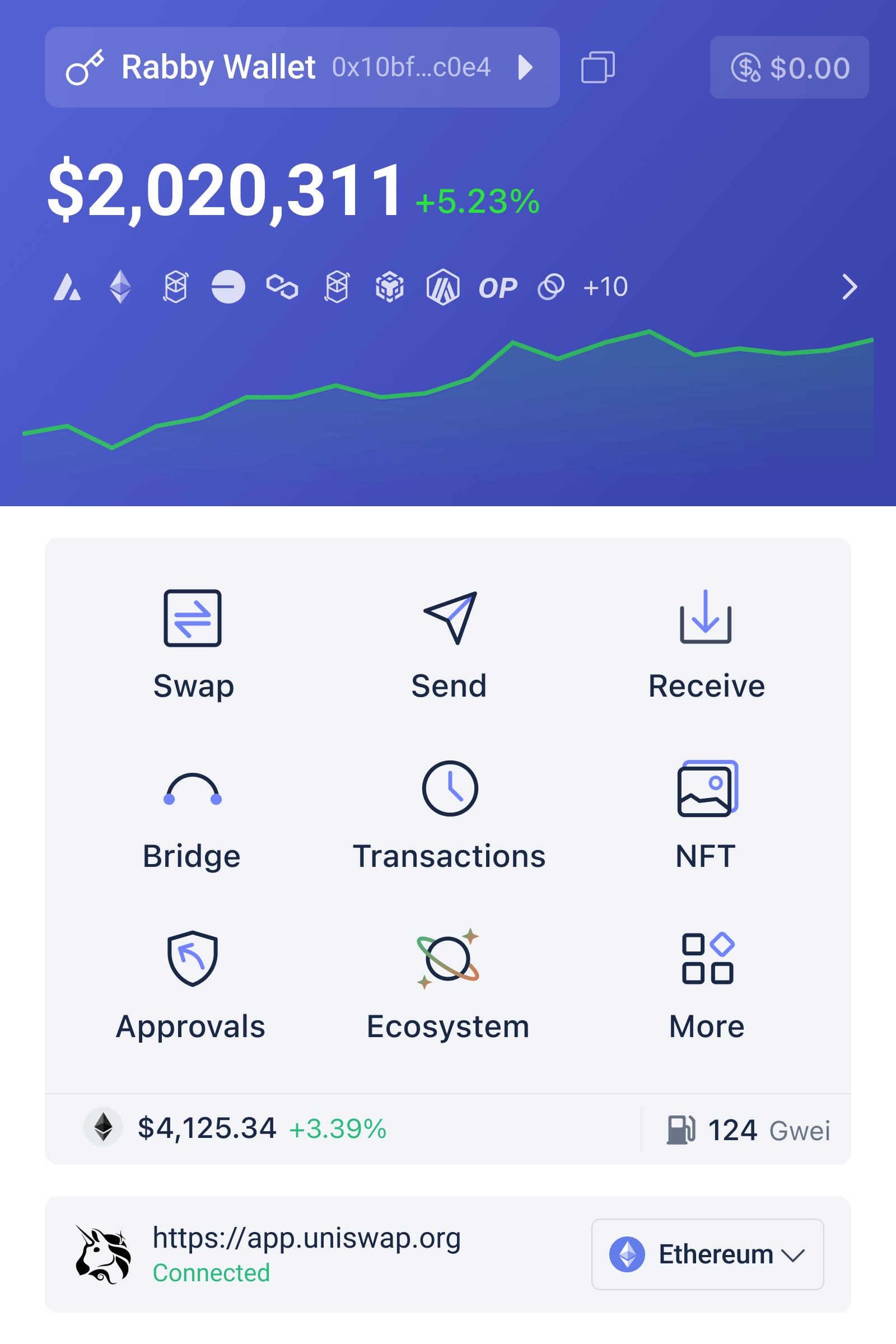
Rabby’s positioning around Ethereum and EVM chains is relevant in this context because a wallet that brings multiple networks into one review environment can reduce a particular source of confusion: signing a transaction without clearly understanding which chain, contract, and assets are involved. Users considering a rabby wallet download should still verify the official installation path, protect the recovery phrase, and review permissions rather than treating wallet choice as a substitute for operational security.
The sharper distinction: execution risk versus economic risk
One of the most useful distinctions for DeFi users is between execution risk and economic risk. Execution risk asks whether the transaction will complete as intended. Economic risk asks whether the completed transaction is still worthwhile after fees, slippage, price movement, and asset-specific risks.
Simulation is primarily an execution-risk tool. Gas estimation and fee selection also relate mainly to execution. Route comparison, slippage limits, liquidity analysis, and destination-asset evaluation address economic risk. These categories overlap, but neither replaces the other. A transaction can execute perfectly and still be a poor trade. It can also be economically attractive in theory but fail because the fee limit, allowance, deadline, or contract state was unsuitable.
This distinction produces a practical decision rule: first ask whether the transaction is understandable and executable; then ask whether the result remains worthwhile under a reasonable range of outcomes. For a cross-chain swap, that second question should include what happens if the destination leg arrives later than expected or if the received asset has lower liquidity than the origin asset.
How to use wallet checks without outsourcing judgment
A careful workflow begins before the signing screen. Confirm the source network, destination network, asset, amount, and recipient or protocol. Inspect the contract interaction rather than relying only on a familiar token symbol. Review the estimated assets leaving the wallet and the assets expected in return. If the wallet presents a simulation, look for unexpected transfers, approvals, or failure warnings.
Next, compare the total economic outcome. A route with lower displayed gas may carry higher swap fees or greater price impact. A bridge route with an attractive quote may require native tokens on the destination chain for later transactions. A transaction that asks for a large or unlimited approval may deserve separate consideration from the immediate swap, because approval risk can persist after the trade is complete.
Finally, keep the fee decision proportional to the transaction. A high-priority setting may be rational when a time-sensitive position is at risk, but it is not automatically efficient. A low fee may be reasonable for a non-urgent transfer, provided the user understands that delay is part of the trade-off. Good optimization is not minimizing one visible number; it is choosing an acceptable balance among cost, speed, reliability, and exposure.
What to watch as wallet tooling develops
The recent Rabby project positioning as a wallet for Ethereum and EVM chains points toward a broader direction in wallet design: abstraction across networks paired with more detailed transaction review. If that direction continues, the important test will not be how many chains appear in a dropdown menu. It will be whether the interface helps users compare complete execution paths and communicate uncertainty clearly.
Useful future improvements would include clearer separation of origin and destination fees, more explicit explanations of bridge failure modes, stronger warnings about persistent approvals, and simulations that show both token movements and relevant contract effects. These features would not remove smart-contract or market risk. They could, however, move wallets from passive signing tools toward informed decision-support systems.
The unresolved challenge is that more information can also overwhelm users. A warning system that flags every unusual contract may produce fatigue, while a simplified screen may hide important details. The best design will likely be layered: a concise decision summary for routine actions, with technically meaningful detail available when the route is complex or anomalous.
Frequently Asked Questions
Can transaction simulation guarantee that a DeFi transaction will succeed?
No. Simulation evaluates a proposed transaction against available state and assumptions. Blockchain state, prices, liquidity, and block conditions can change before confirmation. Simulation is valuable because it can expose likely failures and unexpected effects, but it is not a guarantee.
Is the lowest-gas route always the best cross-chain swap?
No. The lowest gas estimate may correspond to a worse exchange rate, higher price impact, additional destination costs, or greater settlement risk. Compare the expected value received after all known fees and consider the operational consequences of delay or interruption.
What should I check before installing and using an EVM wallet extension?
Use an official source, verify the extension’s identity, protect the recovery phrase offline, and test with a small amount before conducting a substantial transfer. After installation, review the selected network, contract address, token approvals, simulated asset movements, and total transaction cost before signing.
The central lesson is simple but easy to miss: DeFi transaction quality cannot be measured by gas price alone. A safer and more rational decision combines simulation, fee awareness, route economics, and an understanding of how cross-chain systems fail. Wallet tools can make that reasoning faster and clearer, but the final responsibility remains with the signer. The strongest optimization is often the transaction that the user understands well enough to approve—or confidently decline.